
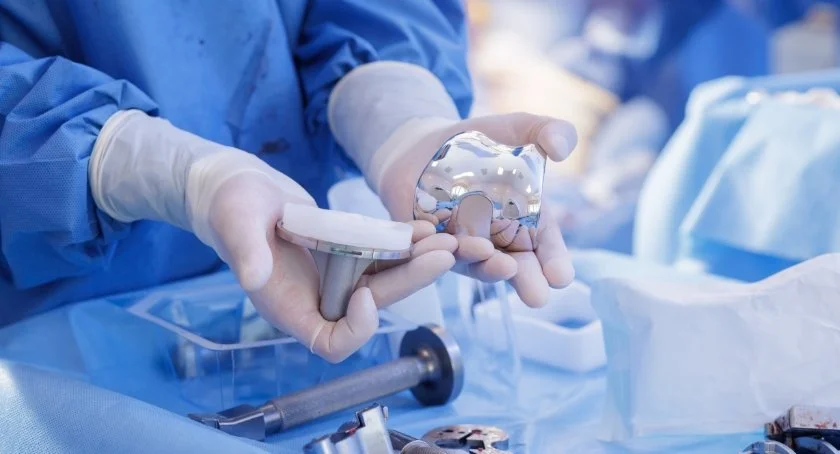
There’s an interesting trend emerging in the orthopedic industry, as evidenced by the transactions announced so far this year: Medtronic’s $650 million cash grab of SPR Therapeutics and its 60-day percutaneous peripheral nerve stimulation system; Zimmer Biomet Holdings Inc.’s $140 million (maximum) purchase of Pacira’s iovera° cryoneurolysis business; and Globus Medical Inc.’s acquisition of Higgs Boson Health, a Duke University-incubated artificial intelligence (AI) and software company in Durham, N.C.
Three of the year’s most visible deals, and none involved an implant. Similarly, other notable transactions have targeted the enabling technologies supporting orthopedic implants.
This string of non-implant-related acquisitions is not a coincidence. As Dave Sheppard mentioned at the ODT Forum in Memphis, orthopedic investments remain strong. However, this year’s deals show the economic unit in orthopedics is shifting from the device itself to the broader episode of care—and the companies pursuing the most aggressive strategies are moving quickly to capitalize on that shift.
2026 Changed the Arithmetic
On Jan. 1, CMS launched the Transforming Episode Accountability Model (TEAM). The Model runs five performance years to Dec. 31, 2030, and is mandatory for IPPS hospitals in 716 select core-based statistical areas (as of August). TEAM covers five surgical categories, including lower extremity joint replacement, surgical hip femur fracture treatment, and spinal fusion.
Procedure mechanics for the hospital are closely intertwined with its financial considerations. Care begins with an inpatient stay or a hospital outpatient procedure and runs through 30 days post-discharge. The procedure “bundle” reimbursement provides hospitals with a target price for covering all services. Hospitals that remain below the target price while meeting quality standards are rewarded with the savings while those that exceed the target price are responsible for the difference. Readmissions, emergency department visits, post-acute placement, and complications all land inside the same cost umbrella as the implant.
Operating alongside TEAM, the CY2026 OPPS and ASC final rule began its three-year phaseout of the Inpatient Only list. The first tranche removed 285 codes, mostly musculoskeletal. CMS simultaneously added 560 procedures to the ASC Covered Procedures List—289 under revised criteria, plus 271 newly de-listed codes—and set the ASC payment update at 2.6%. More than 600 ASCs currently perform total joint replacement.
Think about this: Procedures are shifting to lower-cost service sites at the same time that someone is being held accountable for 30-day outcomes. An orthopedic implant provider is no longer purchasing a device for the procedure, but rather a component for an outcome that will be underwritten. This trend has been developing since the inception of Obamacare but is now moving at a more rapid pace for many reasons, including private equity’s entry into the ASC market.
A 22% Problem or a 78% Opportunity?
A 2024 systematic review in the Journal of Orthopaedic Business found the average standard knee implant cost $5,336, while the mean total primary TKA cost was $23,907—about 22% of the episode total. That means roughly 78% of what the payer currently holds accountable has nothing to do with the implant. It is anesthesia, OR time, length of stay, pain control, physical therapy, discharge disposition, readmission, or revision. For a decade, OEMs competed inside that 22% with bearing surfaces, coatings, and cost-savings programs. In comparison, the other 78% was largely unaddressed because nobody was paying the device industry to address it. It was marketing and not much else.
That dynamic changed this year. The 2026 M&A deal tape so far reflects medtech’s discovery of a market 3.5 times larger than the one in which it had previously been competing. Moreover, there is dry powder in both PE and strategic arsenals.
Purchase Details
In sorting this year’s transactions by the problem they solve, an unmistakable pattern emerges—pain, recovery, and discharge.
SPR’s Sprint system delivers stimulation near peripheral nerves for 60 days with no permanent implant; Medtronic cites 60% of patients achieving meaningful relief, with responders averaging 76% pain reduction. iovera’s° cryoneurolysis showed a 45% opioid reduction over 12 weeks after knee replacement. These solutions are not the old-guard pain products in which cost/benefits and outcomes were constantly debated. These offerings are positively impacting outcomes by reducing inpatient stays and avoiding readmissions, which help hospitals’ bottom lines.
Evidence: Globus targeted Higgs Boson Health to achieve “95% good outcomes at 10 years for all musculoskeletal surgeries,” Founder David Paul said. Note what is being bought here: not a device or a therapy, but a tool for knowing whether the therapy worked. Under current procedure accountability, an outcome that cannot be documented is an outcome that is not reimbursable.
Complications, Not Features
Consider the justification for the implant deals that occurred this year. DePuy Synthes acquired Expanding Innovations for its non-screw interbody technology that prevents cage collapse. Smith+Nephew paid $225 million upfront for Integrity Orthopaedics, plus up to $225 million in milestones, to better compete in a rotator cuff market where conventional repair failure rates range between 20%-40%. Early data on the Tendon Seam system have shown low re-tear rates, reduced sling times, and shorter procedures. Upon review, it’s interesting that almost every item is an episode cost and not a product feature. Decades ago, it was about FAB (features, advantages, benefits) with an emphasis on the “B.” It should now be FABO, with an emphasis on the O (outcomes).
Enabling Technologies—Part of the Equation?
Plenty of money continues to be invested in enabling technologies, though these solutions are not really part of the 78%.
Zimmer Biomet set that table late last year by acquiring Monogram Technologies for its semi- and fully autonomous knee robotics; it paid $4.04 per share in cash plus contingent value rights worth up to $12.37 against milestones running to 2030. DePuy Synthes followed suit in May, purchasing MinMaxMedical’s Gemtrack miniature radiofrequency tracking technology for the VELYS platform. And, VB Spine, spun out of Stryker Corp. and acquired by the Viscogliosi brothers in 2025, completed four transactions in roughly six months: the Cestas spine implant facility in France (from Stryker), the SpineHawk intraoperative visualization platform from Robotron Surgical Technologies, the xvision augmented reality navigation platform from Augmedics, and exclusive rights to Augmedics’ CT-to-fluoroscopy technology.
Considering how these enabling technologies are justified, it makes sense they are part of the equation. Robotics and navigation are not sold on implant performance. Rather, they are sold on predictable OR time, lower revision rates, and on the ability to run a case in a setting outside a hospital’s imaging suite. VB Spine’s stated rationale for wanting CT-to-fluoroscopy technology is precisely that—registration from a standard 2D C-arm, which potentially eliminates the need for costly intraoperative 3D imaging.
What It All Means for an OEM Portfolio
The addressable market has been redefined, and not in the OEMs’ favor unless they act (as some are now doing). If a franchise sits entirely inside the 22%, it is competing for a shrinking share of a shrinking pool—implant pricing remains under pressure as the strategic conversation moves to the other 78%. The deal-makers this year did not diversify away from orthopedics; they extended their claim over more of the same procedure.
The channel is changing faster than most portfolios. The ASC has no sterile processing department, imaging suite, or overnight staff, and those care shortcomings are resulting in fewer trays, simplified instrumentation, and imageless or C-arm-based navigation—namely, protocols that allow patients to go home the same day.
Furthermore, the right to make an outcome claim is being purchased aggressively. The industry has spent 10 years preaching that it sells solutions rather than implants. TEAM turned that “FAB” into a “FABO” and impacted the bottom line. Building the outcome evidence is now more important than ever because it lets providers charge for the 78%—generating positive arithmetic.
The M&A Read
Valuations are dispersing rather than simply rising or falling. Assets with defensible, documented episode-relevant evidence are drawing real competitive tension; undifferentiated implant content is experiencing compressed multiples.
Also, deal structures are telling on the buyers. Smith+Nephew’s Integrity acquisition is a clean 50-50 split between cash and five-year milestones. Zimmer Biomet’s iovera° transaction is $70 million upfront against up to $70 million running through December 2031. Its Monogram deal put roughly three times the cash consideration into contingent value rights tied to milestones out to 2030. Three buyers, three deals, one message: they are paying for proof, not promise. For owners contemplating a process, that changes the preparation.
The companies that conducted deals this year already know where their content sits in the care episode, and they acted because the new math is in their favor. Perhaps orthopedic arithmetic isn’t so bad after all.
More from these authors: How the Top 10’s Great Reshaping is Remaking Orthopedics
Florence Joffroy-Black, CM&AA, is a longtime marketing and M&A expert with experience in the medical technology industry. She’s worked for multinational corporations based in the U.S., Germany, and Israel. She is currently CEO at MedWorld Advisors and can be reached at florencejblack@medworldadvisors.com.
Dave Sheppard, CM&AA, is a former medical technology Fortune 500 executive and is now focused on M&A as a managing partner at MedWorld Advisors. He can be reached at davesheppard@medworldadvisors.com.